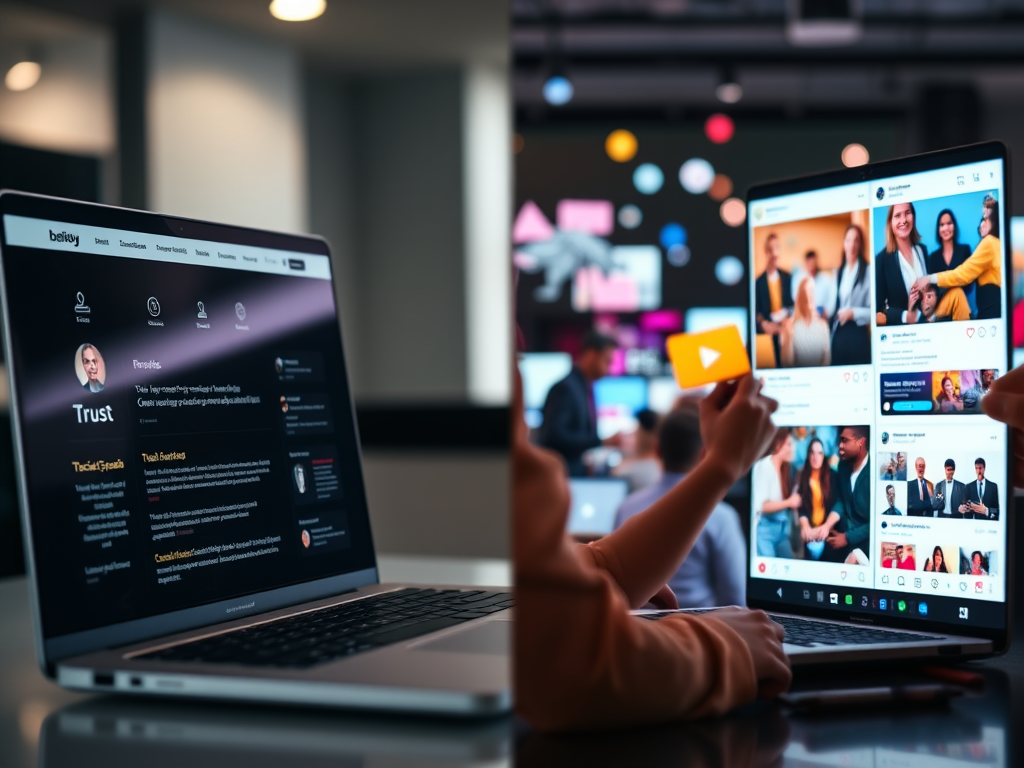
In today’s world, it is impossible for a business to succeed without leveraging the power of the internet. It helps companies reach their target audiences worldwide. There are two ways organizations achieve this milestone:
- Through a professional website
- Using social media handles
Both approaches have their own perks and disadvantages. However, an online store is more beneficial than an account or page on a social media site. For instance, having a professionally built site is the best way to earn consumers’ trust. On the other hand, people usually do not consider social media handles credible as anyone can create them.
This guide will focus on the differences between a website and social media with a business and marketing perspective. Keep scrolling down to learn more.
Top 6 Differences b/w Social Media and Websites
When it comes to marketing, both social media and websites are essential. These channels offer distinctive benefits. For instance, a social media handle might be good for expanding your reach. However, unlike a web store, it fails to increase conversions, ensure ownership, offer e-commerce functionalities, and enhance online visibility.
Let’s explore the top six differences between social media and websites:
1. Trust and Credibility
The first thing your business needs is to position itself as a professional entity. Social media, despite being a great marketing tool, is more dominantly used by hobbyists and side hustlers. Focusing only on these platforms will not offer you a distinctive image. This is where a competent website comes in. It is instrumental in improving professionalism and credibility.
Web pages provide you with enough space to showcase your story, brand values, testimonials, contact information, and case studies. This will increase customers’ trust in your company. However, you must have a well-designed and optimized website for this. Businesses contact reputable companies offering web solutions in Dubai to get a professional digital storefront.
2. Ownership
It is one of the prime differences between the two marketing strategies. Although you can create a business handle on Instagram, Facebook, or any other platform, it does not belong to you in the long run, as you have limited freedom to use it. You will have to follow the relevant platform’s policies and features, which can change at any time.
A website, on the other hand, provides you with full control. You own this channel and can design and modify it as per the business’s requirements. External forces or third parties do not have much say in handling your storefront. You can determine its content, outlook, and features to promote brand identity.
3. Search Engine Visibility
One of the main benefits of a web store is the ability to enhance search engine visibility. You can adapt SEO best practices to rank your site higher on a search engine like Google. This is the best way to help potential customers more feasibly find your brand on the internet.
When users search for a specific service or product on a search engine, websites always appear first. Using relevant keywords, optimizing design, increasing page load speed, and providing informative content will increase your chances of ranking higher. This way, SEO can expand your brand’s reach more actively.
4. E-commerce Functionalities
Statistics show that in 2024, about 80% of e-commerce sales were made on the web. This is another factor that makes a website more advantageous than social media accounts in terms of marketing. The question is why people still prefer websites to shop online.
The answer lies in the remarkable e-commerce functionalities that such a platform offers. These features include a user-friendly design, mobile responsiveness, easy navigation, and chatbots. Additionally, an excellent e-commerce site offers customers a personalized experience.
5. Conversion Optimization
The main objective of social media pages is to enhance clientele and reach new customers. It might not be the best way of optimizing conversion. An e-commerce website, on the other hand, generates more leads and maximizes conversions. This is because a good site always has a sales funnel.
It assists a business in guiding clients through awareness, consideration, and buying. You can develop a catchy and well-optimized landing page and create a clear call-to-action (CTA) button on each page. Moreover, generating contact forms on your site can also do wonders in this regard.
6. Detailed Information
Last but not least, you might not be able to inform a target audience about your business and the products or services it offers through social media accounts or pages. As a result, this tool cannot increase customer trust beyond a specific limit. A website, on the contrary, is more suitable for this purpose.
You can post in-depth content about your brand on a digital storefront. It helps describe your services, products’ benefits, and the company’s value. Moreover, in the form of blogs, you can publish industry insights to establish yourself as a credible source. It is, however, critical to have a well-optimized site. You can opt for web solutions in Dubai to achieve this milestone.
Want an Excellent Ecommerce Website?
There are numerous benefits to having a digital storefront for your business. It is more advantageous than social media pages in terms of professionalism, ownership, and conversion optimization. It also guarantees ownership and remarkable features. Contact an esteemed web development company now if you want an excellent ecommerce website.
 Web Technology Lab
Leave a comment